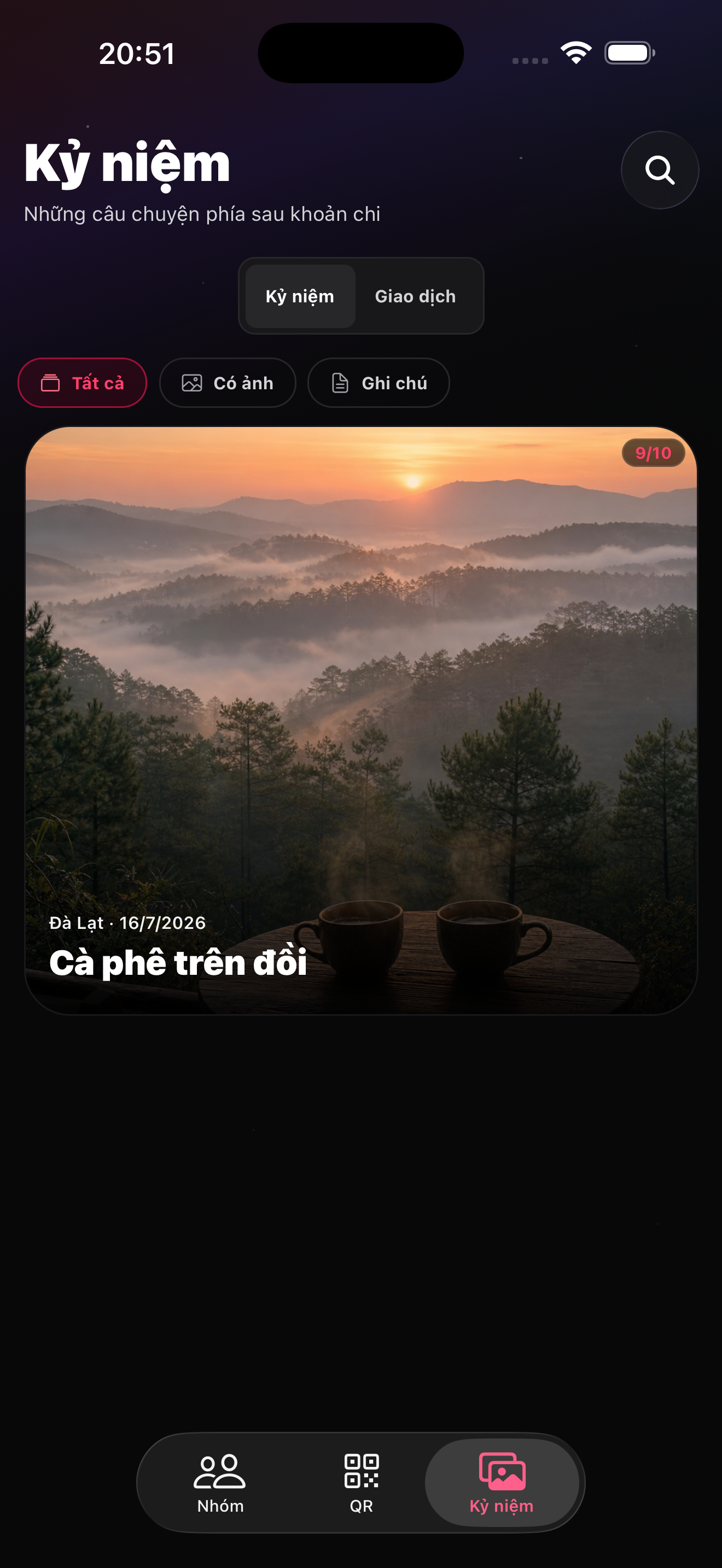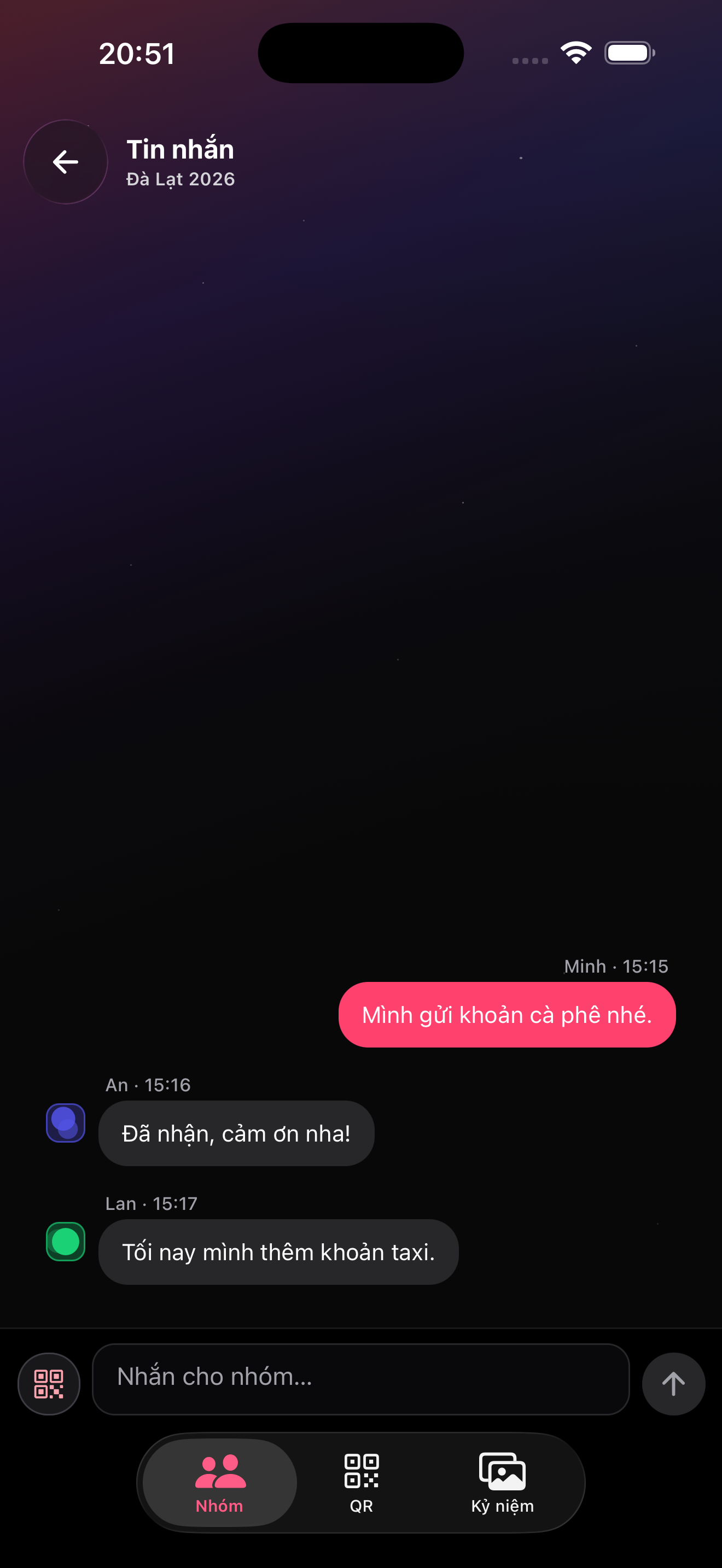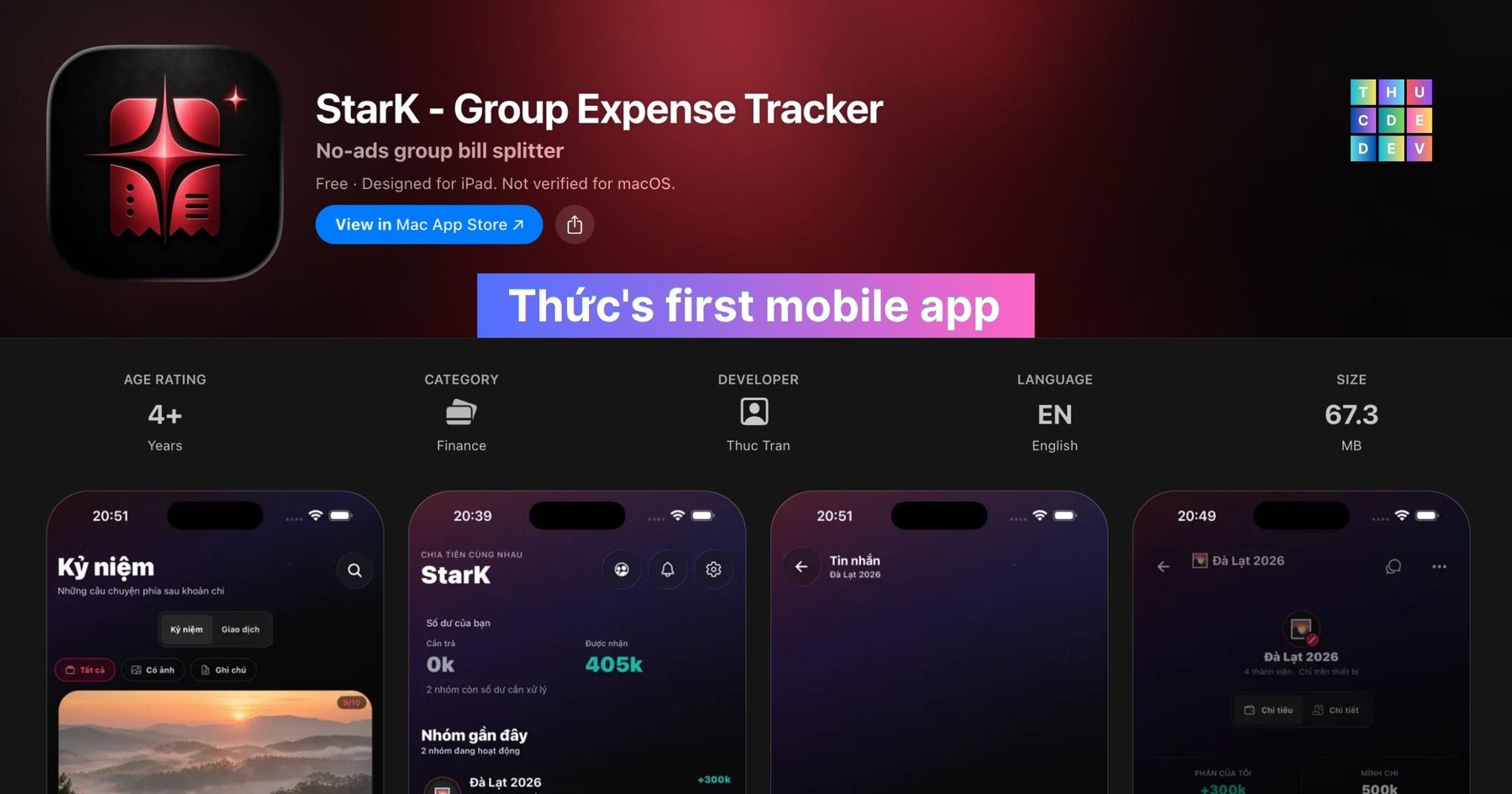
I used to have 4 months of practical experience with React Native, but that was quite a long time ago, around ~2021 at a fairly famous and popular company in Vietnam, especially in the South. I was a Fresher back then, but because I couldn't manage a work-life balance, I resigned after the probation period.
I worked on React Native
At that time, they hired quite a lot of people, I remember hundreds for that recruitment batch, divided into many departments. I was assigned to work on the mobile app, knowing almost nothing besides basic React!
To be honest, back then I felt... extremely exhausted. Exhausted because the MSI gaming laptop that I insisted on buying back then (wanting to play games -- though I ended up barely playing) could no longer keep up. It was heavy, slow, drained the battery fast, and got really hot... partly because it ran Windows, and partly because of the Covid pandemic, I had to work from home for all 4 months without even stepping foot into the office once!
At that time, every time I wanted to build a new version, I had to use TeamViewer to access the mentor's Macbook (he had a Macbook reserved for anyone who wanted to build/develop via remote access, that sort of thing). Every time I did that, it was laggy, built slowly, and development was done through a simulator...) Looking back, it was extremely difficult!
However, I must admit that React Native back then was top-notch compared to having to build two separate applications for Android and iOS. Also, I say it was great partly because the app "cooked up" by the company at that time had outclassed many other companies—it was fast, smooth, and extremely easy to use.
At that time, each build took ~20-30 minutes for Android/iOS. For Android, we installed APKs; for iOS, TestFlight (I don't remember clearly, but iOS installation was much harder), so that QA testers could download and test.
=> In my mind, mobile apps were inherently something extremely tough and costly.
Ever since AI became widespread and easily accessible, ideas have gradually been brought to life, repetitive tasks can be automated, and many things that used to require a lot of effort in the past have now become more convenient than ever. Building mobile apps is no exception.
So is it easy? I would say it depends. It depends on how you look at a product, how you define it—if you want it to be easy, it's easy; if hard, it will be hard. Meaning that with AI, you can build almost any piece of software, but how far you take it depends largely on the "vision" of the person who wants to build/own it. Personally, I consider AI to be an extremely good tool, but using it effectively requires a "serious investment." Simply put, with the same tool, a skilled craftsperson will create products that stand out with a touch of "artistry."
AI is an extremely great tool, especially for those who know how to use it (meaning more effectively). For example, knowing Excel is a good skill, but mastering it like a pro requires exceptional capability and experience.
I am particularly inspired by products and software with extremely pleasant user experiences, and I often desire to create such products myself. Therefore, when "building" a product, I always spend a lot of time on the idea and experience rather than what lies behind it (note that this does not mean my apps have weak architecture; I don't need to prove it's strong, but it's solid enough to meet the experience requirements I set for myself).
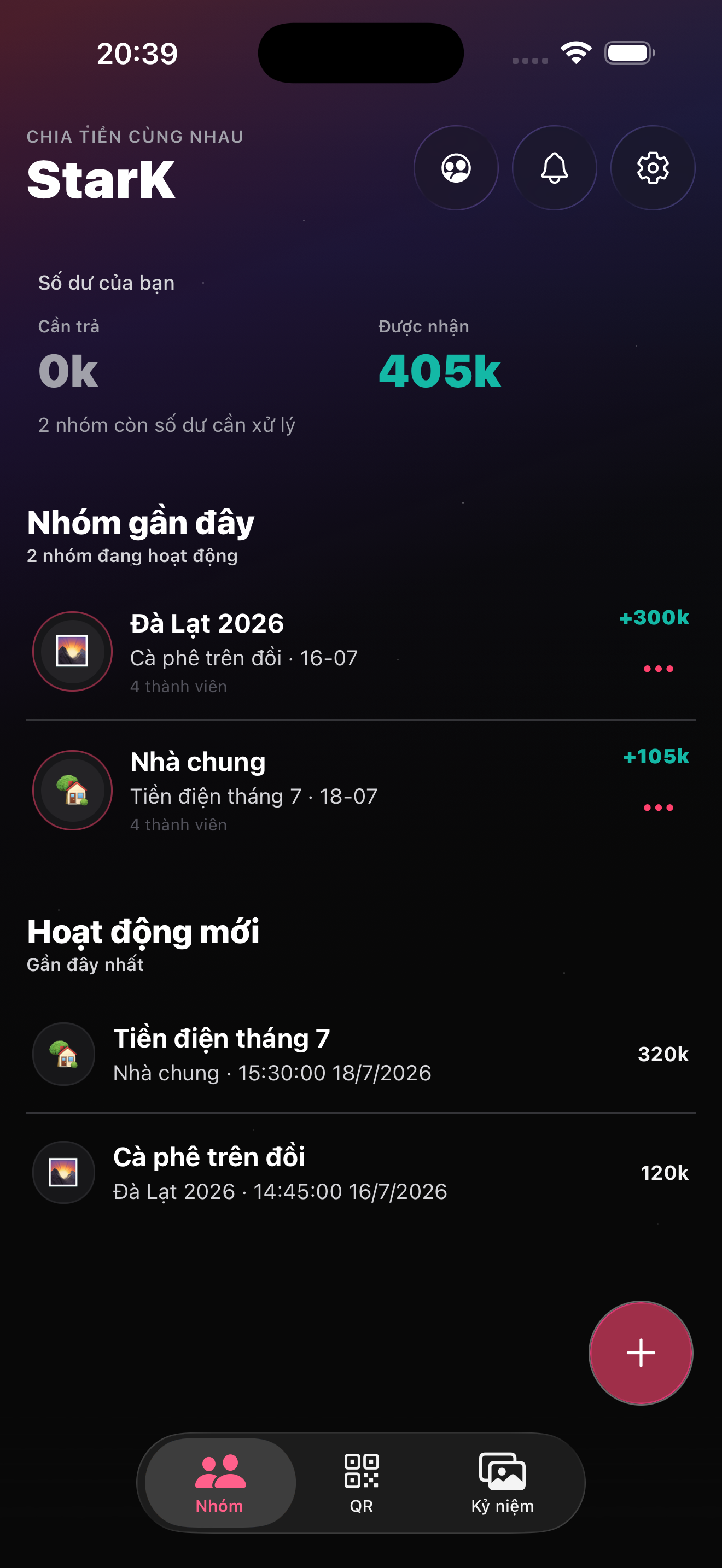
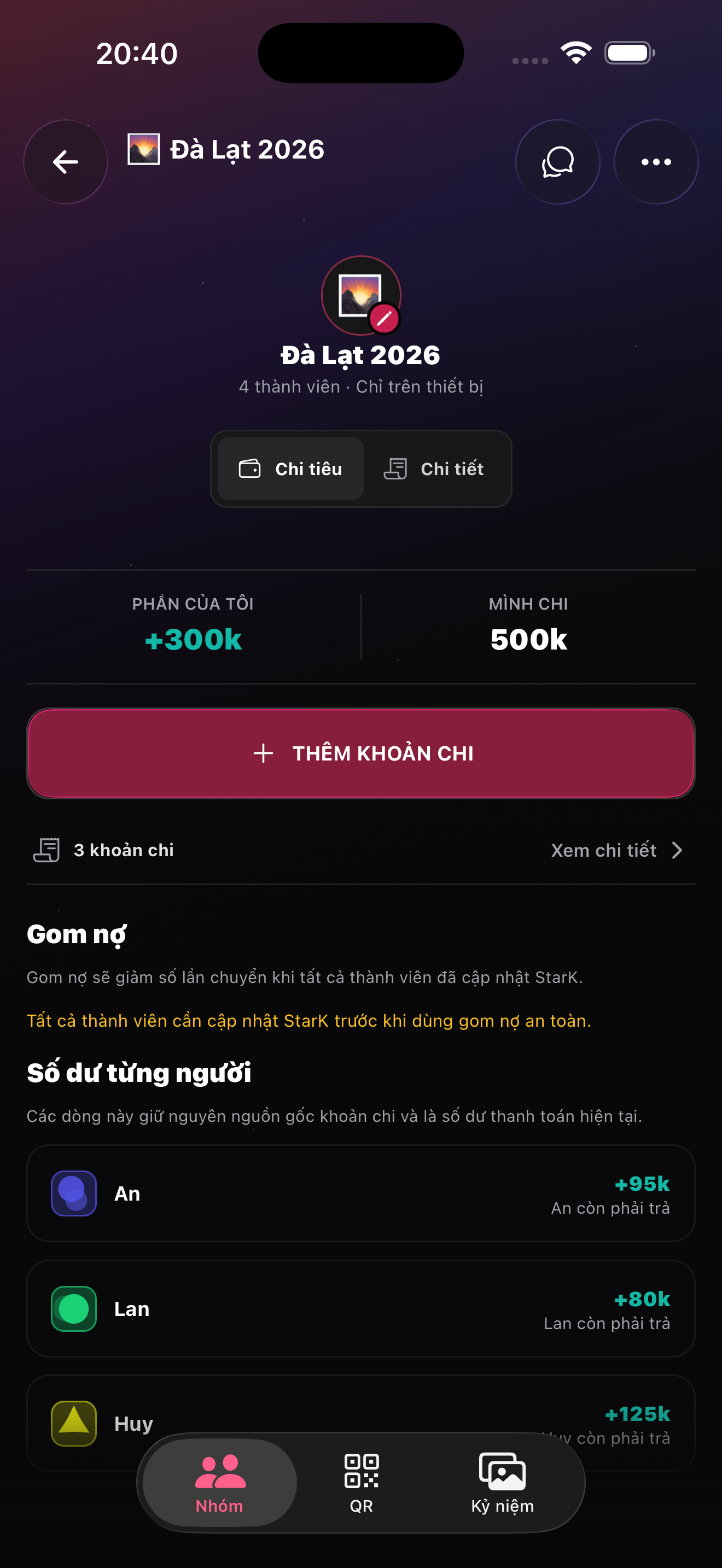
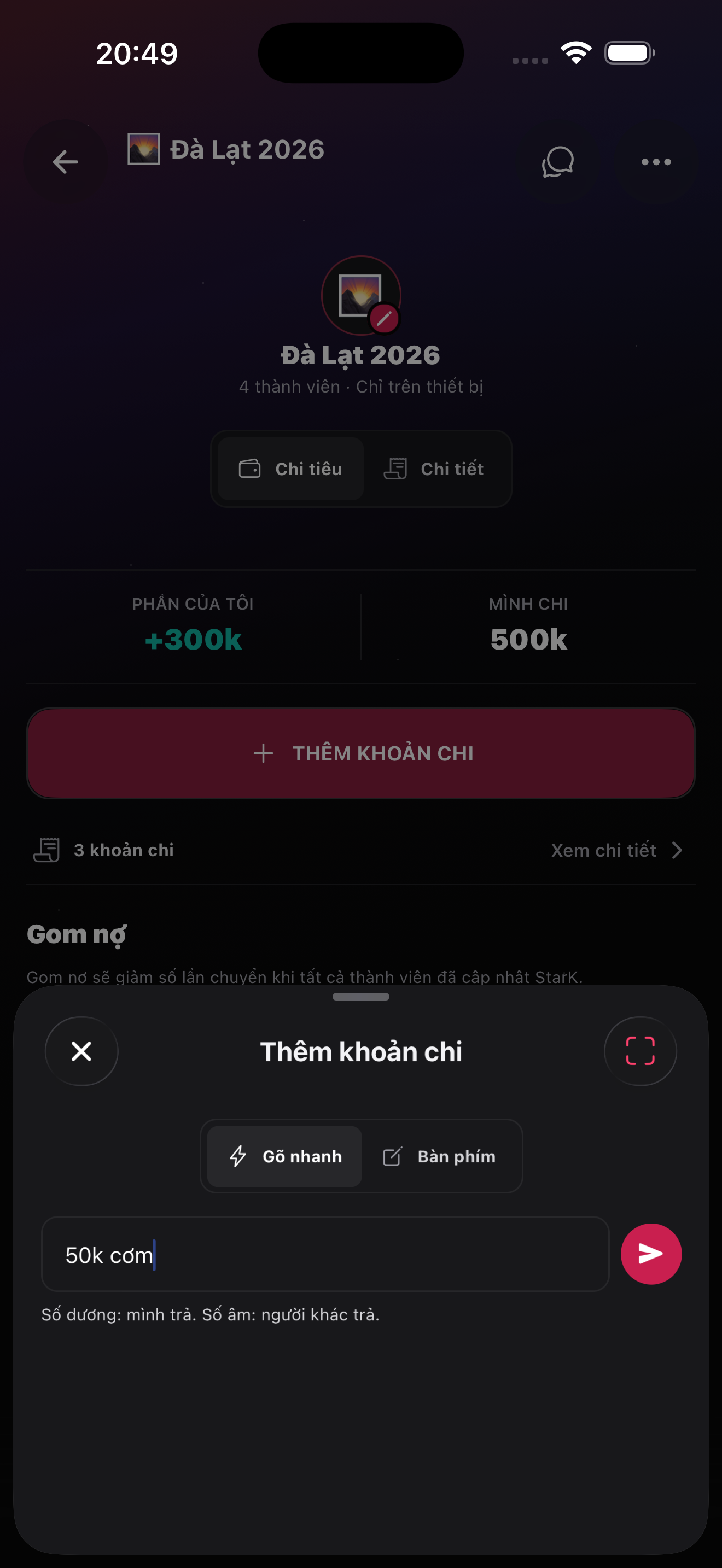
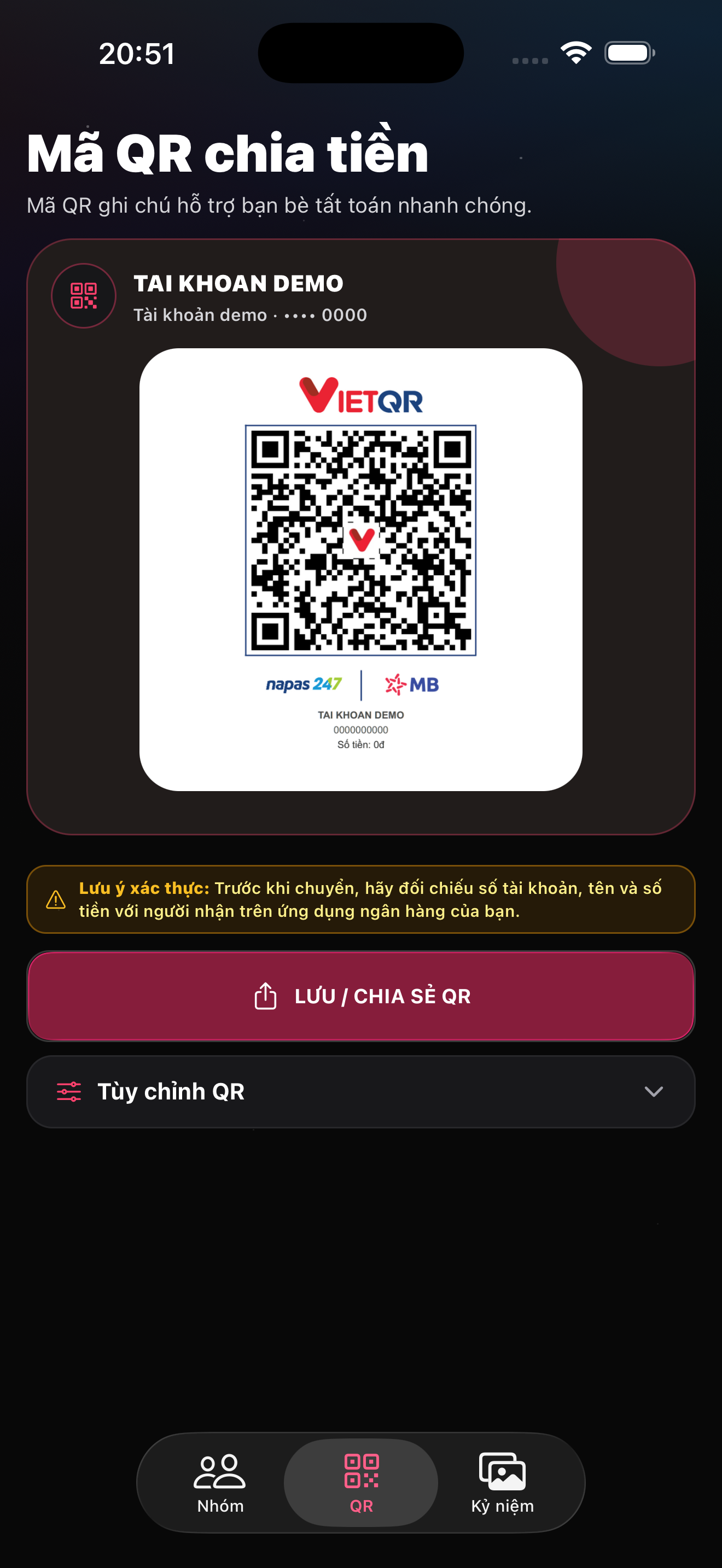
My friends and I often go out to eat and hang out together, incurring shared expenses. Sensing that managing cash flow to settle payments back and forth was somewhat difficult (though not to the point of being inconvenient), I came up with an idea a long time ago for an app where my friends and I could easily log and manage shared expenses.
I had planned to build it with Flutter about 1.5 years ago, back when Agentic Coding wasn't popular yet(?). At that time, I felt that building a mobile app was somewhat easier than before, but there were still many challenges. So everything was set aside, and I returned to web applications (with many improvements over older products).
It wasn't until about 2 weeks ago, with good tools in hand, that I suddenly thought: why not try building a mobile app again? And now I'm so glad I chose that path 😋
The early versions of StarK were very crude and unpolished—it basically ran on both platforms because I was able to release early on Google Play and TestFlight (iOS)—however, it was still a bit difficult to use, especially for end-users.
So I sent the app to my friends and received invaluable feedback. Then I fixed it, tried again, fixed it, and tried again.
=> I couldn't get a production-ready app after just a few attempts, but rather after many iterations. The difference was that I didn't stop until I got real results—if I do something, it must be done right.
With the criteria that a product is a complete, packaged, and easily deliverable unit, I set standards for myself. Thus, I needed everything from A to Z: app name, concept, logo, publishing procedures, packaging, delivery (where "coding" was just one part of the whole process) - AI contributed to virtually every step, making preparation fast and efficient.
Even though it was my first app, I also wanted to ensure it could actually be published, because it would feel useless to me if it were just something running informally or requiring a computer to be open to run a server...
To publish it, there were many steps I had to prepare, do wrong, and fix.
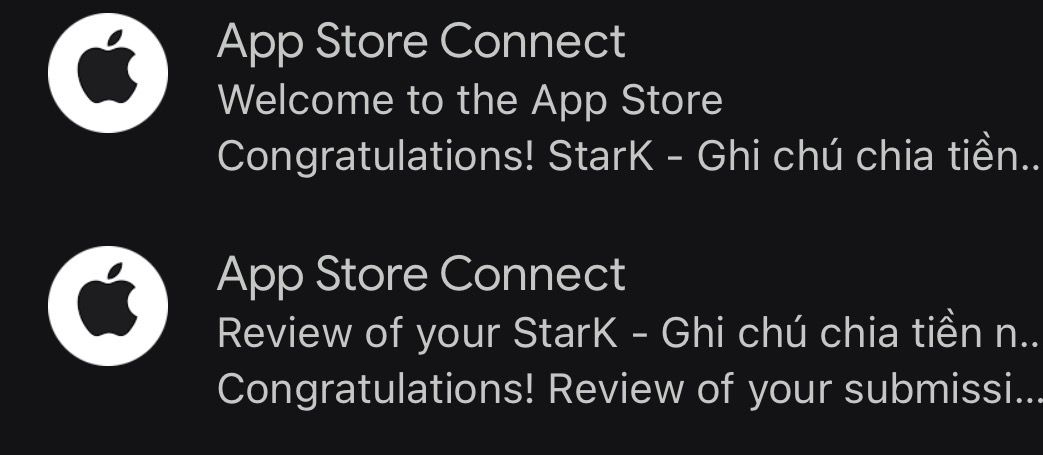
1043 x 455, 52.8 KB, JPG
The effort finally paid off when about a week ago, the App Store officially approved my app—StarK is now available for anyone to download!
This wasn't a long journey, but it was certainly not lacking... luck. Thanks to timely support and my own efforts, I definitely couldn't have achieved this without all those elements coming together.