
8 min read
From Airport Survival to Navigating Public Transit with Ease

Nowadays, the easiest and most seamless solution is purchasing an international travel eSIM online before your flight (via Airalo, Maya Mobile, Gohub, Nomad, Klook, etc.). Scan the QR code to install the profile onto your phone—no swapping physical SIM cards, your primary number stays active for banking OTP SMS, and no hunting through airport convenience stores!

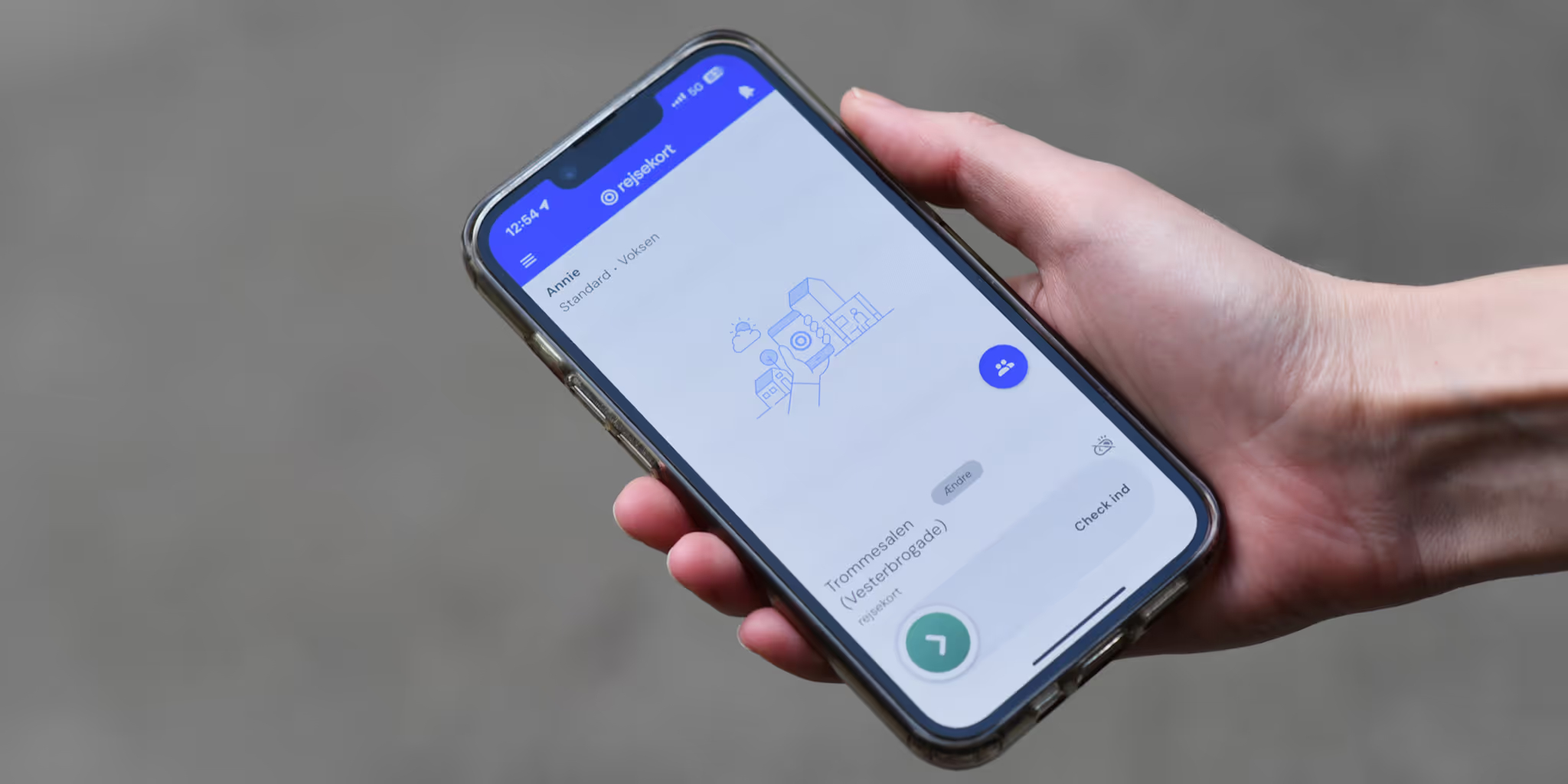
Option 1: The "Rejsekort" App – Swipe to Check-in & Check-out (Pay-As-You-Go)
This is the nationwide digital successor to the blue plastic card. The app uses background GPS to track your travel route and automatically applies discounted Rejsekort fares. International tourists do NOT need a Danish MitID—simply download the app, enter your phone number, and attach an international credit/debit card (Visa, Mastercard) or Apple Pay.
How to ride: Right before boarding a train, bus, or metro, swipe the green slider right to Check ind. When switching between metro, bus, or train during a single trip, you don't need to do anything. When arriving at your final destination, swipe the red slider left to Check ud. The app includes Smart Check-out to remind you if you forget.
Option 2: The "Rejsebillet" or "DOT Tickets" App – Buy a City Pass (Best for 1–3 Day Tourists)
If you don't want the hassle of remembering to check in and check out, purchase a City Pass Small (Zones 1–4) for 100 DKK / 24 hours (also available in 48h, 72h, 120h durations). It covers your journey from CPH Airport straight to the city center and provides unlimited rides on the Metro, S-train, Movia buses, and yellow harbour ferries (Havnebus). Simply display the digital ticket if inspected—no card tapping required!
Option 3: Physical Paper Tickets from Station Kiosks or 7-Eleven
If your phone runs out of battery, you can purchase paper tickets directly at the touchscreen ticket vending machines (red DSB machines or grey Metro kiosks) at CPH Airport and all train stations using contactless cards.
Right after landing at Copenhagen Airport (CPH) in Denmark, my team and I gathered to find a place to buy SIM cards and train tickets to head into the city center, about 7–8 km away. When we checked several 7-Eleven shops around the arrivals hall, they had all run out of SIM cards. We started to panic a little, until someone found one in Terminal 2. We hurried over to grab it immediately—navigating a foreign city without mobile data is practically impossible!
"Could you hold my luggage for a second, please?"

From our experience, purchasing a transit card (Rejsekort Anonym) was the traditional way to get around easily. Buying single paper tickets every time is noticeably more expensive and easy to lose. The card itself cost 80 DKK, and required an initial top-up of 100 DKK, bringing the total to 180 DKK (roughly ~650k–700k VND) right out of the gate (*゜ー゜*)!
Wait a second—converting that into Vietnamese Dong was quite a shock! When traveling abroad, it's sometimes best not to convert everything back home to keep your peace of mind!

Oh my goodness, before September the rate was hovering around 3,300 VND, and it had climbed up since.
Also, watch out for foreign transaction fees on your credit or debit cards. Several of our colleagues noticed hefty international fee charges posted on their accounts after returning home, so make sure to check your bank's foreign currency fee policy before you splurge.
Before coming over, I exchanged 300 Euros just in case for neighboring EU countries. In Denmark itself, tapping cards or using Apple Pay everywhere was by far the easiest and fastest choice!
Speaking of connectivity, I bought a physical Lycamobile SIM card back then. Rumor had it that it was the most stable and popular MVNO network for international travelers. It cost 29 DKK (~$4 USD) for 5 GB valid for 30 days. Once exhausted, you could top up with generous data bundles like 100 GB for around 50 DKK.


Here, the transit atmosphere is remarkably relaxed. There are no turnstiles or ticket barriers. Instead, you'll find standalone card poles where you tap your transit card before boarding, and tap once again upon arrival. The system calculates and deducts the fare automatically.
When we first arrived, it was quite novel. You hold your card against the reader for about a second until it chimes—pulling it away too quickly won't register!
It truly feels modern, exceptionally clean, and highly civilized!
And no, I'm not speaking ill of Vietnam at all—please don't jump to conclusions!
Now, you might think: without gates or barriers, why couldn't someone just ride for free without tapping in?
Technically, you could attempt fare evasion—but please don't. Upholding integrity makes international travel and visa applications easier for future travelers from our country. Never let small expenses create negative stereotypes!
Moreover, ticket inspections happen quite frequently! Inspectors board randomly with hand-held scanners to verify transit cards or inspect in-app digital ticket QR codes.
What happens if you forget to tap in or don't hold a valid ticket?
You will face an immediate, steep fine! The fare penalty (Kontrolafgift) is 1,000 DKK (roughly ~$145 USD). Danish transit inspectors are known for zero tolerance—there is no leniency simply because you are an international tourist. Always verify your ticket is activated before boarding.
The Rejsekort system serves the entire integrated transit network: Metro, buses, and regional trains.
First, locate a check-in point (a blue illuminated ring marked with "Check ind"):

Tap your card and hold it for one second until it beeps.
Then hop on board! Crucial Tip: When transferring between metro lines or switching to a bus during a single journey, simply tap the "Check ind" pole on the new vehicle. The system automatically chains the transfer. DO NOT tap Check ud until you conclude your overall trip!
Only upon reaching your final destination do you tap out at a red illuminated pole marked "Check ud":

In my view, not at all! Putting it into daily perspective: a modest restaurant meal in Copenhagen costs around 100 DKK, whereas daily transit expenses might tally up to 40–50 DKK (roughly half a meal). For Scandinavia and Western Europe, that is very reasonable.
10,000,000,000 / 10 points! No complaints whatsoever!
Incredibly fast, ultra-frequent, impeccably clean, and exceptionally reliable.
The Copenhagen Metro operates 24/7 with zero downtime! Trains run every 2 minutes during peak hours, every 3–4 minutes during standard daytime hours, and every 15–20 minutes late at night (7–15 minutes on Friday and Saturday nights). You never have to worry about missing the last train after an evening out!
What about city buses?
Equally convenient! I once rode a night bus back to our hotel close to 1:00 AM without any hassle.
Similarly affordable and seamlessly integrated. The cost was minor enough that it barely registered in our travel budget!
The beauty is: you don't have to! Your transit card or City Pass works identically across metro, commuter S-trains, and local buses.
In Denmark, public transport functions as one unified network. One card or pass opens up all transit modes across the region, including the yellow harbour ferries!
On buses, card readers are mounted directly on board near the doors. Step in at the front, tap in on the blue reader, and tap out on the red reader right before stepping off!
Almost forgot! Why? Because taxis in Copenhagen are far less practical and notoriously pricey!
I took a taxi once to our company office, and a 7 km ride cost nearly 350 DKK (~$50 USD)—on top of getting delayed in peak-hour traffic!
The metro covers that same distance for just 24–30 DKK, on its own dedicated tracks with zero traffic jams!
Walking and taking public transit is both healthy and wonderfully gentle on your travel wallet!
And that is everything you need to know about getting around and staying connected in Copenhagen! If you have any questions, feel free to leave a comment below!